Peddi: Refracted Museum
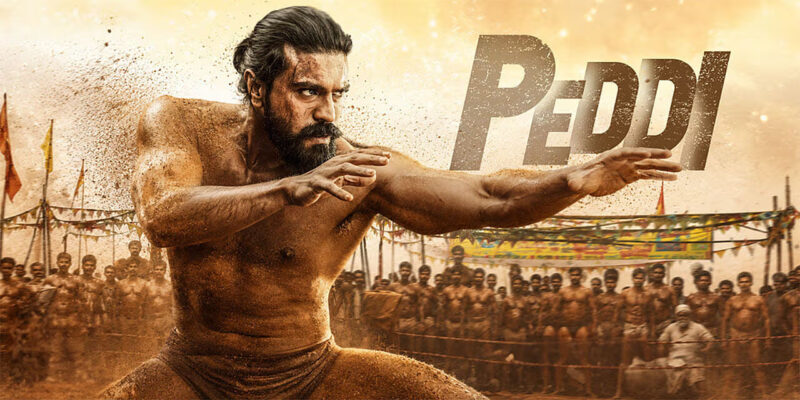
Star Cast: Ram Charan, Shiva Rajkumar, Jagapathi Babu, Janhvi Kapoor, Boman Irani, Ravi Kishan, and Satya
Music Composed by A R Rahman
Edited by Navin Nooli
Cinematography by R Rathnavelu Peddi Review
Direction by Buchi Babu Sana
Ram Charan has been more emotional and highly passionate about Peddi than any of his previous films. You understand why that is when you watch the movie and his performance is definitely the high point. If you’re planning to watch the movie and do not want to be spoiled, kindly stop reading here. My advice: Only if you’re fixated on watching the film, give it a try. Otherwise, no rush.
Entering the Akhada: Prepare for a Dhobi Pachaad
You might have understood why I started this time without any kind of mythological references or deep human analysis for this film. It exists just because Charan wanted to see himself in a sports drama and that’s it. But if anyone loves the way I draw parallels for them, here are my two cents: Arjun went into exile for 12 years before the entire Pandava clan had been ordered to do so by Duryodhana. He went and created such an impression for the Pandavas during that period that the Rajasuya Yaaga by Yudhishthir became a success even before the real event. How can these two be equated? Arjun goes to Nagaloka, Manipur and after going around Bharatavarsha, he ends up at Dwaraka. Peddi started off as a cricketer, went into exile to become a wrestler and then finally achieved his goal as a para track field athlete. His home gained recognition because of his continued efforts to do his Dharma.
Not gonna go deep into the mythological angle as the film doesn’t give much but surface level emotions. It tries hard to ignite melodrama without any real depth in the scenes or subtext in the visuals. Each scene feels like an overblown rehash of many scenes from popular films. The cricket portions feel like they have been directly taken from 1983 [2014] We see rural tournaments being a huge thing in recent years as cricket became an unofficial national sport. In the early 1990s, finding a municipal ground for all sports in a city like Vijayawada used to be hard and yet in Vijayanagaram, there are three grounds. Fine, no need to go into specifics, but people betting their hard earned money while watching matches and that too in the 1990s, when the BCCI was struggling to host matches and send Indian cricketers to foreign nations. Again, let’s give that a pass, too. For an “unnamed” village, from when did National Government permission become necessary just to have a name? Locals decide a name organically and the state government just agrees to it on record. So, these 1,800 people could have always chosen a name for themselves. But more importantly, choosing a name is different from an identity. My name is chosen by my parents, but my identity is earned by my work and deeds—good or bad.
Also Read: Uppena: Turbulent Tides
Since when did the Railway Police start beating an entire village rather than arresting them? Wait a second, when they burnt the track, wouldn’t the media attention fall on that place? If the Railway Police did catch and torture them, wouldn’t the government be forced to give them some sort of identity cards or name their village? When an uprising in a village named Naxalbari can give rise to Naxalites, how can burning a train track and that too on a mountain not be seen as an offense and punishable, but just as a regular crime? Fine, the 1990s did not have extensive media coverage. Since when did wrestling competitions and that too at a serious state/national level, start becoming challenges between two Akhadas? Okay, let it be some plot armour. At least the Andhra Pradesh wrestling team would have coaches and representatives, where are they? Why are entire villages and their heads pulling in money for the Gournaidu academy, when wrestling is said to be a dying sport in AP? Most importantly, when they can start a cricket academy for local players like Rambujji to try their luck at the Ranji level at least, why are they investing in wrestling? Just for Gournaidu, who was Kodi Rammurthy’s disciple? Let’s leave everything else. Since when did the Railway Police stop investigating if a traveller lost his leg by accident or on purpose? Who sponsored a “running blade“, a highly expensive artificial leg that allows him to run? and since when did getting selected for the Paralympics become as easy as buying a running blade? Don’t athletes have to grind through state and national competitions first?
The purpose of Peddi playing sports reflects Kanaa‘s [2018] core point. The wrestling scenes of one guru vs. another guru are directly taken from Sarpatta Parambarai [2021] and Dangal [2016]. If wrestling competitions are so celebrated in Vijayanagaram, why are there no national level athletes from the area? The running competition is directly taken from Bhaag Milkha Bhaag [2013] and the major Appalasoori scenes from Mari Selvaraj’s Bison [2025] and Pariyerum Perumal [2018], even reminds you of his final scene from Anthahpuram [1998]. Unfortunately or fortunately, only the Boman Irani scenes seem original from Buchi Babu Sana’s mind, other than the Janhvi Kapoor scenes. One major observation about the Janhvi scenes, Buchi Babu is tasteless. There is a difference between showcasing a bold and edgy lady and being straight out crass. And there is a lack of any continuity and connectivity between characters. Everyone wants to watch Peddi perform, but when did they change and accept him/his village people? What happens to the Vijayanagaram people, from Rambujji to Gournaidu? Why are they not supporting one of their own when he is in trouble? Why do they leave him post the National event? Can’t Gourinaidu take a step forward for his own wrestler and stand up for his identity? The inconsistencies are so consistent that you can just pick any scene and think, “doesn’t it seem to be written after watching several films?” rather than genuinely writing a story.
The movie grows bland with each passing sequence and it could have ended at the wrestling competitions itself. He won the semi finals and if he won the finals, that’s it done. He could still lose his leg and become a para-athlete to showcase his never give up attitude in the final 10 mins. The Delhi stretch looks unrealistic and forced, feeling like it belongs to another film. If Peddi went to Delhi without anyone to help him, just to fulfill Appalasoori’s last wish and found out that their identity lies in winning some competition or making a name that stretch would have worked. When you know that Peddi has become a huge player and when he is openly injured by his fellow player, don’t the National Sports Authority conduct simple medical tests to determine the fitness of a player? His injury should worsen progressively, but not be revealed just for shock value and to suddenly prolong the runtime. Since when did the Indian government start running special trains for players to remote villages? Not in the 1990s, as far as historical research shows.
Eventhough 5 – 6 members wrote the screenplay or because of it, the film ends up being a patchy script. It seems to have been designed around the core idea of a villager becoming a crossover athlete and hastily assembled by taking references from various sports films. While the character of Appalasoori, played well by Jagapathi Babu, does leave an impact, he doesn’t carry the necessary emotion. Instead of helping the audience understand the madness behind him asking the same thing for 30 years, the script reduces him to pulling off a minister’s pancha before being humiliated. No one believes in his attempts or tries to understand him until his death. His words and his madness needed to form the crux of Peddi’s character growth, acting as an inciting incident. Instead, this happens at the interval, leaving us wondering if the entire first half is just set-up. Even the second half turns into set-up until the story really moves into action, with Peddi choosing to abandon his village for his identity. The symbolism of wearing a nose ring is never really brought up and we are expected to understand it in the final scene. At least a simple indication of it during the hour long establishment would have helped, but it doesn’t come up. This is an example of why the entire script feels patchy and Boman Irani’s character doesn’t bring that cohesion. Why do you need Peddi to try different sports just for Boman to shout, “Crossover athlete”? Why Boman? Anyone could have done that unless you force fitted him for “Pan-India” appeal. Even Divyenndu Sharma is lazily written as Rambujji for the same appeal.
“Slasher” Buchi Babu Sana proves that he got over excited by the opportunity, especially with his one idea of bringing some sort of physical disability to his lead. In Uppena, the protagonist is castrated… here, he loses a leg. Why couldn’t he lose his leg because of Rambujji, Janhvi Kapoor’s father or while trying to win his final wrestling match? Why introduce another unnecessary character to bring in that angle in such a lousy and clumsy fashion? He saw many sports films, but why did he miss Chak De! India? I don’t understand. Kabir Khan did not lose a leg, hand, eye or reproductive organ to achieve his “identity” back. He was called a gaddar by the next generation and because of his achievement, those same children started looking at hockey as a possible career. What impact does this film’s approach leave? Sultan [2016] doesn’t lose an organ, but he loses his baby and then his ego. My point here is that you shouldn’t forcefully infuse an external emotion for the sake of it when you can find a stronger emotion within the core conflict. This script lacks that strong drive and hence ends up being a patchwork. Conveniently, Gournaidu watches a cricket match only at a specific plot point, even though matches have been regular at the ground. As an aata coolie, Ram Charan earns more than all of his fellow villagers, yet we see him doing nothing with that money. At least he could have used it to build his home, if not help others. Lagaan [2001] showed a village learning cricket and gave us a genuine lived-in feeling. Bison, with all its flaws, tried to present a focused story. Here, in trying to be ” mass commercial“, the film loses all of its “plot and just ends up being a mishmash. AR Rahman worked his magic despite all of this and Ratnavelu is good. But the editing is severely patchy, with random shots that reflect the randomness of the script. It almost feels like a 7-hour film was condensed into 3 hours, not due to content, but confusion. Hence, the film ends up creepily crawling like a rat that ate mild poison, it can neither die nor survive. It can only operate as a piece that exists solely for Ram Charan and will end up being talked about for his efforts, which should have enhanced the experience rather than being the whole point.
Theatrical Trailer:
Recent Comments